
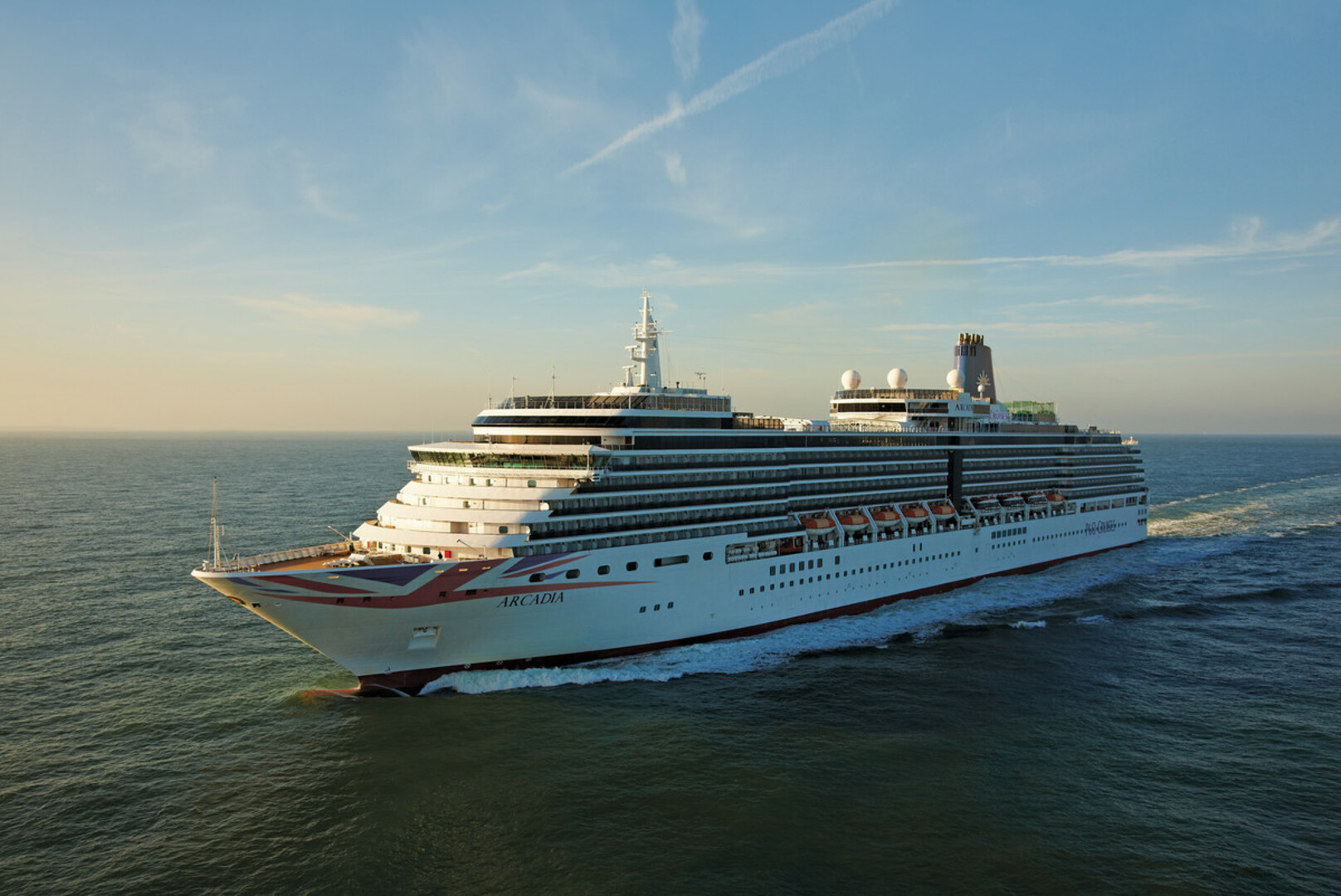
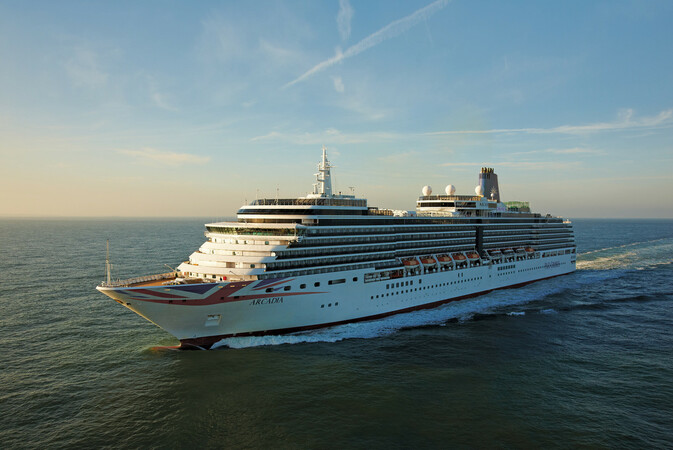
Arcadia
Arcadia

British Isles

£1,869
from
Start date
25 May 2026
Nights
16
Cruise code
J605
Type
Ocean
Price Type
cruise only

About the ship

Check out the Accommodation

Accommodation is a crucial part of every holiday. From a simple space to lay your head, to something a little more luxurious – everyone has their own style. We've got a range of accommodation on our ships to suit all travellers.
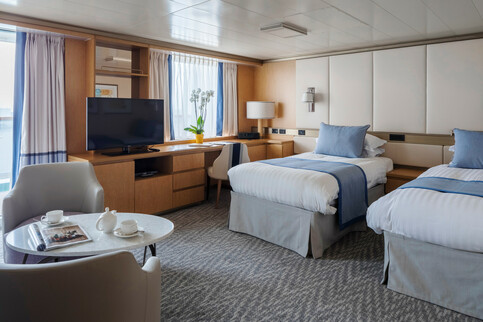
P&O Cruises Arcadia Suite.jpg
Suite

Delight in VIP treatment throughout your holiday with butler service, spacious accommodation, a superior bathroom with full-size whirlpool bath*, inclusive room service, breakfast each day in an exclusive restaurant plus all the luxuries included with Mini-suites.

The luxuries of a Suite include a whirlpool bath, dual sinks, dressing area and toiletries from The White Company. With an exclusive restaurant for breakfast and a dedicated butler, not to mention Champagne and chocolates on arrival, it’s a holiday like never before.*Some exceptions apply

Suite has the following benefits:
  • Air conditioning
  • Tea and coffee machine
  • Free in-cabin TV
  • Butler service
  • Cabin safe
  • Cabin hairdryer
  • Cabin telephone
  • Larger dressing area
  • Toiletries from The White Company
  • British plug socket
  • Chiller
  • A whirpool bath
  • Inclusive room service
  • Exclusive restaurants
  • Bathrobe and Slippers
  • Canapés on celebration night
  • Champagne on arrival
  • Chocolates on arrival
  • Floor to ceiling glass doors
  • Balcony
  • Priority check-in and boarding (from Southampton)
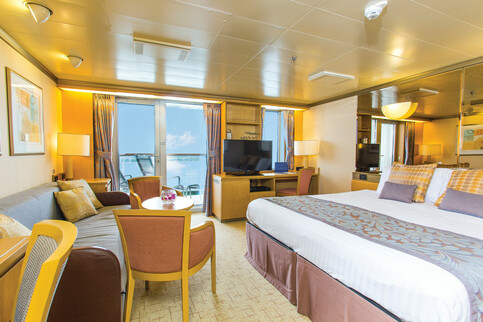
P&O Cruises Arcadia Mini Suite.jpg
Mini-Suites

Like the sound of a Suite but don’t think you’d need all of the features? A Mini-suite is the perfect option. Sink into a full-size whirlpool bath* and take your pick of the luxurious premier toiletries. Pop open some Champagne, or savour a fresh cup of coffee from your own machine*. When you're ready to kick back after a day of exploring, you've a spacious lounge area to relax in.

A Mini-suite is a premium private space, offering more light and roomy relaxation in a spacious lounge. Enjoy luxuries like a whirlpool bath*, your own coffee machine and your own sound system*. *Some exceptions apply

Mini Suite has the following benefits:
  • Air conditioning
  • Tea and coffee machine
  • Free in-cabin TV
  • Butler service
  • Cabin safe
  • Cabin hairdryer
  • Cabin telephone
  • Larger dressing area
  • Toiletries from The White Company
  • British plug socket
  • Chiller
  • A whirpool bath
  • Inclusive room service
  • Exclusive restaurants
  • Bathrobe and Slippers
  • Canapés on celebration night
  • Champagne on arrival
  • Chocolates on arrival
  • Floor to ceiling glass doors
  • Balcony
  • Priority check-in and boarding (from Southampton)
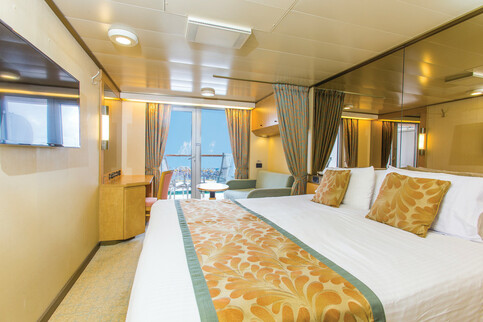
P&O Cruises Arcadia Deluxe Balcony.jpg
Deluxe Balcony Cabins

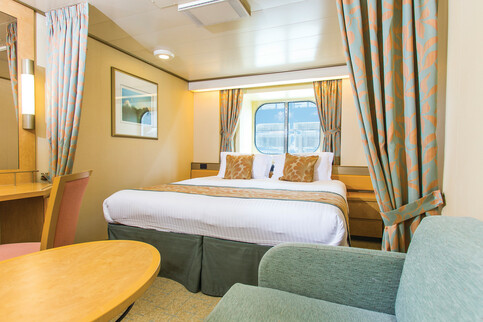
Your own private balcony is the ideal place to enjoy your morning cuppa or a quiet moment when the mood takes you. There's a choice of balcony furniture, as well as your own table, chairs, sofa and TV inside for a relaxing home- from- home feel. Beds convert to twin or king size.

A bigger balcony needs bigger windows for enjoying a great view. Your Deluxe Balcony cabin has floor-to-ceiling glass doors, extra space and a comfy sofa for relaxing. We'll also provide fluffy bath robes and slippers to add a touch of class.

Balcony cabin has the following benefits
  • Air conditioning
  • Tea and coffee facilities
  • Free in-cabin TV
  • Daily steward service
  • Cabin safe
  • Cabin hairdryer
  • Cabin telephone
  • Vanity writing desk and chair
  • Toiletries from The White Company
  • British plug socket
  • Chiller
  • Floor to ceiling glass doors
  • Balcony

P&O Cruises Arcadia Outside Cabin.jpg
Sea View Cabins

Relax in a comfy cabin with a porthole or window on the world to bring the outside in. Your room with a view includes a sofa and / or table and chairs, with beds that convert from twin to king size. You also have your own TV and The White Company toiletries.

If natural light and a view are a must, our Sea view cabins ensure you’re never too far away from those relaxing views! Each one offers a similar layout and features of an Inside cabin, but with the addition of a window or porthole. You’ll enjoy natural light in your cabin although the view will be obstructed, for example by a lifeboat.

Sea view cabins have the following benefits
  • Air conditioning
  • Tea and coffee facilities
  • Free in-cabin TV
  • Daily steward service
  • Cabin safe
  • Cabin hairdryer
  • Cabin telephone
  • Vanity writing desk and chair
  • Toiletries from The White Company
  • British plug socket
  • Chiller
  • Window/porthole

P&O Cruises, Arcadia, Sea View _Obstructed Views_.jpg
Sea View Cabins (Obstructed View)

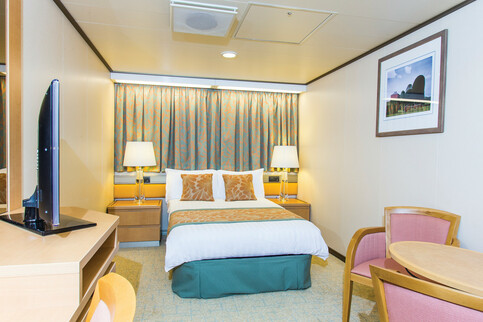
If natural light and a view are a must, our Sea view cabins ensure you’re never too far away from those relaxing views! Each one offers a similar layout and features of an Inside cabin, but with the addition of a window or porthole. You’ll enjoy natural light in your cabin although the view will be obstructed, for example by a lifeboat.

If natural light and a view are a must, our Sea view cabins ensure you’re never too far away from those relaxing views! Each one offers a similar layout and features of an Inside cabin, but with the addition of a window or porthole. You’ll enjoy natural light in your cabin although the view will be obstructed, for example by a lifeboat.

Sea view cabins have the following benefits
  • Air conditioning
  • Tea and coffee facilities
  • Free in-cabin TV
  • Daily steward service
  • Cabin safe
  • Cabin hairdryer
  • Cabin telephone
  • Vanity writing desk and chair
  • Toiletries from The White Company
  • British plug socket
  • Chiller
  • Window/porthole

P&O Cruises Arcadia Inside.jpg
Inside Cabin

A practical and pocket-friendly choice if you simply need a comfy place to lay your head each night and know that your days will be spent enjoying everything that your ship has to offer.

Cosy and comfortable, an Inside cabin is just the place to relax and re-energise for all your holiday adventures on board and ashore. You'll have your own TV, toiletries from The White Company and (on some ships) these cabins even come with a sofa and / or table and chairs.

Inside cabin has the following benefits

  • Air conditioning
  • Tea and coffee facilities
  • Free in-cabin TV
  • Daily steward service
  • Cabin safe
  • Cabin hairdryer
  • Cabin telephone
  • Vanity writing desk and chair
  • Toiletries from The White Company
  • British plug socket
  • Chiller 

P&O Cruises Arcadia Deluxe Balcony.jpg
Single Balcony Cabins

Step into your private outdoor space for some fresh air whenever you like. If you like to feel the sea breeze and enjoy having your own private outdoor space, a Balcony cabin is ideal. Your balcony is the perfect place to savour a lazy continental breakfast or spend a few peaceful hours sunbathing with a book.

Your own private balcony is the ideal place to enjoy your morning cuppa or a quiet moment when the mood takes you. There's a choice of balcony furniture, as well as your own table, chairs, sofa and TV inside for a relaxing home- from- home feel. Beds convert to twin or king size.

Balcony cabins have the following benefits

  • Air conditioning
  • Tea and coffee facilities
  • Free in-cabin TV
  • Daily steward service
  • Cabin safe
  • Cabin hairdryer
  • Cabin telephone
  • Vanity writing desk and chair
  • Toiletries from The White Company
  • British plug socket
  • Chiller
  • Floor to ceiling glass doors
  • Balcony

P&O Cruises Arcadia Inside.jpg
Inside Single Cabins

Enjoy the perfect hideaway in a Single Inside cabin. There's a wardrobe and plenty of drawer space for all your outfits. You have your own TV and toiletries from The White Company. Some Single cabins may have a table and chairs or even a sofa for relaxing in private.
Check out the Entertainment
Check out the Health & Fitness

Exclusively for adults only, Arcadia offers sophistication and relaxation when exploring new destinations. With its glass ceiling, the stunning atrium sets the tone for your voyage. Enjoy Palladium shows, Marco Pierre White's Ocean Grill, or the Thermal Suite. Every moment aboard Arcadia promises to be memorable.

Pricing

Inside
from
£1,869
Outside
from
£2,839
Balcony
from
£3,369
Suite
from
£5,969
Fly cruise
fully booked

Let's explore the world

17 days of discovery: a voyage beyond dreams
GBSOU Southampton - Colin Osborne
Day 1
Southampton, England

Lying near the head of Southampton Water, a peninsula between the estuaries of the Rivers Test and Itchen, Southampton is Britain’s largest cruise port. It has been one of England’s major ports since the Middle Ages, when it exported wool and hides from the hinterland and imported wine from Bordeaux. The city suffered heavy damage during World War Two and as a result the centre has been extensively rebuilt, but there are still some interesting medieval buildings including the Bargate, one of the finest city gatehouses in England.

Church, Cobh, County Cork, Ireland
Day 3
Cobh, Ireland

Cork City's nearby harbor district has seen plenty of history. Cork Harbour's draws include Fota Island—with an arboretum, a wildlife park, and the Fota House ancestral estate—and the fishing port of Cobh.

Holyhead
Day 4
Holyhead, Wales

Once a northern defense post against Irish raiders, Holyhead later became best known as a ferry port for Ireland. The dockside bustle is not matched by the town, however, which maintains just a small population. Nonetheless, thousands of years of settlement have given Holyhead rich historical ruins to explore, with more in the surrounding hiking friendly landscape.

Killybegs, Ireland
Day 6
Killybegs, Ireland

Killybegs The days start early in Killybegs, as this quiet fishing town rumbles to life, and ships with red and blue paint peeling from their hulls quietly depart, ready for a morning's hard work at sea. Located in a scenic part of County Donegal, Killybegs is Ireland's fishing capital, and the salty breeze and pretty streets serve as a revitalising medicine for visitors. The town is also your gateway to some of the country's most majestic coastal scenery, which is dotted with flashing white lighthouses, keeping watch over invigorating seascapes. Killybegs enjoys a privileged position on the coast of north west of Ireland, close to the spectacular Slieve League - a titanic mountain, which explodes upwards from frothing ocean. Walk as close as you dare to the coastline’s sheer drops, or admire the folding cliffs from the best vantage point, down on the water.

Kirkwall
Day 8
Kirkwall, Orkney Islands, Scotland

In bustling Kirkwall, the main town on Orkney, there's plenty to see in the narrow, winding streets extending from the harbor. The cathedral and some museums are highlights.

Lerwick, Shetland Islands
Day 9
Lerwick, Shetland Islands, Scotland

Founded by Dutch fishermen in the 17th century, Lerwick today is a busy town and administrative center. Handsome stone buildings—known as lodberries—line the harbor; they provided loading bays for goods, some of them illegal. The town's twisting flagstone lanes and harbor once heaved with activity, and Lerwick is still an active port today. This is also where most visitors to Shetland dock, spilling out of cruise ships, allowing passengers to walk around the town.

Stornoway, Isle of Lewis, Scotland
Day 11
Stornoway, Isle of Lewis, Scotland

Tour description Stornoway, Scotland The Isle of Lewis and Harris is the northernmost and largest of the Outer Hebrides-the Western Isles in common parlance. The island's only major town, Stornoway, is on a nearly landlocked harbor on the east coast of Lewis. It's the port capital for the Outer Hebrides and the island's cultural center, such that it is. Stornoway has an increasing number of good restaurants. Lewis has some fine historic attractions, including the Calanais Standing Stones-a truly magical place. The Uists are known for their rare, plentiful wildlife. Stornoway. Besides being the island's main entry point for ferries, Stornoway is also Lewis's main arts center. You'll find some good restaurants in town if you want to have lunch off the ship. The town can be explored by bicycle if you are so inclined. Local rental shops can give you advice on where to ride, including a route to Tolsta that takes in five stunning beaches before reaching the edge of moorland. An Lanntair Arts Centre. The fabulous An Lanntair Arts Centre has exhibitions of contemporary and traditional art, as well as a cinema, a gift shop, and a restaurant serving international and Scottish fare. There are frequent traditional musical and theatrical events in the impressive auditorium. Kenneth St.. Black House. In the small community of Arnol, the Black House is a well-preserved example of an increasingly rare type of traditional Hebridean home. Once common throughout the islands-even into the 1950s-these dwellings were built without mortar and thatched on a timber framework without eaves. Other characteristic features include an open central peat hearth and the absence of a chimney-hence the soot and the designation black. On display inside are many of the house's original furnishings. To reach Arnol from Port of Ness, head south on the A857 and pick up the A858 at Barvas. Off A858, 21 mi southwest of Port of Ness. Admission charged. Calanais Standing Stones. These impressive stones are actually part of a cluster of several different archaeological sites in this area. Probably positioned in several stages between 3000 BC and 1500 BC, the grouping consists of an avenue of 19 monoliths extending northward from a circle of 13 stones, with other rows leading south, east, and west. Ruins of a cairn sit within the circle on the east side. Researchers believe they may have been used for astronomical observations, but you can create your own explanations. The visitor center has an exhibit on the stones, a gift shop, and a tearoom. On an unmarked road off A858. Admission charged. Dun Carloway. One of the best-preserved Iron Age brochs (circular stone towers) in Scotland, Dun Carloway dominates the scattered community of Carloway. The mysterious tower was probably built around 2,000 years ago as protection against seaborne raiders. The Dun Broch Centre explains more about the broch and its setting. Off A857. Gearrannan. Up a side road north from Carloway, Gearrannan is an old black-house village that has been brought back to life with a museum screening excellent short films on peat cutting and weaving. For a unique experience, groups can rent the restored houses. Leverburgh. At Leverburgh you can take the ferry to North Uist. Nearby Northton has several attractions; St. Clement's Church at Rodel is particularly worth a visit. MacGillivray Centre. Located in a round building overlooking the bay, the MacGillivray Centre gives insight into the life and work of William MacGillivray (1796-1852), a noted naturalist with strong links to Harris. MacGillivray authored the five-volume History of British Birds. This is a great location for a picnic (there are tables for just such a purpose). A walk to a ruined church starts at the parking lot. A859, Northton. Seallam! Visitor Centre and Co Leis Thu? Genealogical Research Centre. The center is where you can trace your Western Isles ancestry. Photographs and interpretive signs describe the history of Harris and its people. The owners organize guided walks and cultural evenings weekly between May and September. Off A859, Northton. Admission charged. St. Clement's Church. At the southernmost point of Harris is the community of Rodel, where you can find St. Clement's Church, a cruciform church standing on a hillock. This is the most impressive pre-Reformation church in the Outer Hebrides; it was built around 1500 and contains the magnificently sculptured tomb (1528) of the church's builder, Alasdair Crotach, MacLeod chief of Dunvegan Castle. Rodel is 3 mi south of Leverburgh and 21 mi south of Tarbert. A859, Rodel. Port of Ness. The stark, windswept community of Port of Ness, 30 mi north of Stornoway, cradles a small harbor squeezed in among the rocks. Butt of Lewis Lighthouse. At the northernmost point of Lewis stands the Butt of Lewis Lighthouse, designed by David and Thomas Stevenson (of the prominent engineering family whose best-known member was not an engineer at all, but the novelist Robert Louis Stevenson). The structure was first lighted in 1862. The adjacent cliffs provide a good vantage point for viewing seabirds, whales, and porpoises. The lighthouse is northwest of Port of Ness along the B8014. Shopping Harris tweed is available at many outlets on the islands, including some of the weavers' homes; keep an eye out for signs directing you to weavers' workshops. Harris Tweed Artisans Cooperative. The Harris Tweed Artisans Cooperative sells stylish and quirky hand-crafted tweed clothing, hats, accessories, all made by artists belonging to the cooperative. 40 Point St., Stornoway. Borgh Pottery. At Borgh Pottery, open from Monday to Saturday 9:30 to 6, you can buy attractive hand-thrown studio pottery made on the premises, including lamps, vases, mugs, and dishes. Fivepenny House, A857, Borve.

Day 12
Loch Thom, Greenock, UK
Day 13
Greenock, Scotland

Trendy stores, a booming cultural life, fascinating architecture, and stylish restaurants reinforce Glasgow's claim to being Scotland's most exciting city. After decades of decline, it has experienced an urban renaissance uniquely its own. The city’s grand architecture reflects a prosperous past built on trade and shipbuilding. Today buildings by Charles Rennie Mackintosh hold pride of place along with the Zaha Hadid–designed Riverside Museum.Glasgow (the "dear green place," as it was known) was founded some 1,500 years ago. Legend has it that the king of Strathclyde, irate about his wife's infidelity, had a ring he had given her thrown into the river Clyde. (Apparently she had passed it on to an admirer.) When the king demanded to know where the ring had gone, the distraught queen asked the advice of her confessor, St. Mungo. He suggested fishing for it—and the first salmon to emerge had the ring in its mouth. The moment is commemorated on the city's coat of arms.The medieval city expanded when it was given a royal license to trade; the current High Street was the main thoroughfare at the time. The vast profits from American cotton and tobacco built the grand mansions of the Merchant City in the 18th century. In the 19th century the river Clyde became the center of a vibrant shipbuilding industry, fed by the city’s iron and steel works. The city grew again, but its internal divisions grew at the same time. The West End harbored the elegant homes of the newly rich shipyard owners. Down by the river, areas like the infamous Gorbals, with its crowded slums, sheltered the laborers who built the ships. They came from the Highlands, expelled to make way for sheep, or from Ireland, where the potato famines drove thousands from their homes.During the 19th century the population grew from 80,000 to more than a million. And the new prosperity gave Glasgow its grand neoclassical buildings, such as those built by Alexander "Greek" Thomson, as well as the adventurous visionary buildings designed by Charles Rennie Mackintosh and others who produced Glasgow’s Arts and Crafts movement. The City Chambers, built in 1888, are a proud statement in marble and gold sandstone, a clear symbol of the wealthy and powerful Victorian industrialists' hopes for the future.The decline of shipbuilding and the closure of the factories led to much speculation as to what direction the city would take now. The curious thing is that, at least in part, the past gave the city a new lease of life. It was as if people looked at their city and saw Glasgow’s beauty for the first time: its extraordinarily rich architectural heritage, its leafy parks, its artistic heritage, and its complex social history. Today Glasgow is a vibrant cultural center and a commercial hub, as well as a launching pad from which to explore the rest of Scotland, which, as it turns out, is not so far away. In fact, it takes only 40 minutes to reach Loch Lomond, where the other Scotland begins.

Belfast, Northern Island, UK
Day 14
Belfast, Northern Ireland

Before English and Scottish settlers arrived in the 1600s, Belfast was a tiny village called Béal Feirste ("sandbank ford") belonging to Ulster's ancient O'Neill clan. With the advent of the Plantation period (when settlers arrived in the 1600s), Sir Arthur Chichester, from Devon in southwestern England, received the city from the English Crown, and his son was made Earl of Donegall. Huguenots fleeing persecution from France settled near here, bringing their valuable linen-work skills. In the 18th century, Belfast underwent a phenomenal expansion—its population doubled every 10 years, despite an ever-present sectarian divide. Although the Anglican gentry despised the Presbyterian artisans—who, in turn, distrusted the native Catholics—Belfast's growth continued at a dizzying speed. The city was a great Victorian success story, an industrial boomtown whose prosperity was built on trade, especially linen and shipbuilding. Famously (or infamously), the Titanic was built here, giving Belfast, for a time, the nickname "Titanic Town." Having laid the foundation stone of the city's university in 1845, Queen Victoria returned to Belfast in 1849 (she is recalled in the names of buildings, streets, bars, monuments, and other places around the city), and in the same year, the university opened under the name Queen's College. Nearly 40 years later, in 1888, Victoria granted Belfast its city charter. Today its population is nearly 300,000, tourist numbers have increased, and this dramatically transformed city is enjoying an unparalleled renaissance.This is all a welcome change from the period when news about Belfast meant reports about "the Troubles." Since the 1994 ceasefire, Northern Ireland's capital city has benefited from major hotel investment, gentrified quaysides (or strands), a sophisticated new performing arts center, and major initiatives to boost tourism. Although the 1996 bombing of offices at Canary Wharf in London disrupted the 1994 peace agreement, the ceasefire was officially reestablished on July 20, 1997, and this embattled city began its quest for a newfound identity.Since 2008, the city has restored all its major public buildings such as museums, churches, theaters, City Hall, Ulster Hall—and even the glorious Crown Bar—spending millions of pounds on its built heritage. A gaol that at the height of the Troubles held some of the most notorious murderers involved in paramilitary violence is now a major visitor attraction.Belfast's city center is made up of three roughly contiguous areas that are easy to navigate on foot. From the south end to the north, it's about an hour's leisurely walk.

The waterfront at Liverpool
Day 15
Liverpool, England

From world-class attractions and sports to legendary music, Liverpool offers old-world charm with modern sophistication, underpinned by a rich cultural history.

GBSOU Southampton - Colin Osborne
Day 17
Southampton, England

Lying near the head of Southampton Water, a peninsula between the estuaries of the Rivers Test and Itchen, Southampton is Britain’s largest cruise port. It has been one of England’s major ports since the Middle Ages, when it exported wool and hides from the hinterland and imported wine from Bordeaux. The city suffered heavy damage during World War Two and as a result the centre has been extensively rebuilt, but there are still some interesting medieval buildings including the Bargate, one of the finest city gatehouses in England.

Arcadia
Arcadia

British Isles

£1,869
from
Start date
25 May 2026
Nights
16
Cruise code
J605
Type
Ocean
Price Type
cruise only

Pricing

Inside
from
£1,869
Outside
from
£2,839
Balcony
from
£3,369
Suite
from
£5,969
Fly cruise
fully booked

About the ship

Check out the Accommodation

Accommodation is a crucial part of every holiday. From a simple space to lay your head, to something a little more luxurious – everyone has their own style. We've got a range of accommodation on our ships to suit all travellers.

P&O Cruises Arcadia Suite.jpg
Suite

Delight in VIP treatment throughout your holiday with butler service, spacious accommodation, a superior bathroom with full-size whirlpool bath*, inclusive room service, breakfast each day in an exclusive restaurant plus all the luxuries included with Mini-suites.

The luxuries of a Suite include a whirlpool bath, dual sinks, dressing area and toiletries from The White Company. With an exclusive restaurant for breakfast and a dedicated butler, not to mention Champagne and chocolates on arrival, it’s a holiday like never before.*Some exceptions apply

Suite has the following benefits:

  • Air conditioning
  • Tea and coffee machine
  • Free in-cabin TV
  • Butler service
  • Cabin safe
  • Cabin hairdryer
  • Cabin telephone
  • Larger dressing area
  • Toiletries from The White Company
  • British plug socket
  • Chiller
  • A whirpool bath
  • Inclusive room service
  • Exclusive restaurants
  • Bathrobe and Slippers
  • Canapés on celebration night
  • Champagne on arrival
  • Chocolates on arrival
  • Floor to ceiling glass doors
  • Balcony
  • Priority check-in and boarding (from Southampton)
P&O Cruises Arcadia Mini Suite.jpg
Mini-Suites

Like the sound of a Suite but don’t think you’d need all of the features? A Mini-suite is the perfect option. Sink into a full-size whirlpool bath* and take your pick of the luxurious premier toiletries. Pop open some Champagne, or savour a fresh cup of coffee from your own machine*. When you're ready to kick back after a day of exploring, you've a spacious lounge area to relax in.

A Mini-suite is a premium private space, offering more light and roomy relaxation in a spacious lounge. Enjoy luxuries like a whirlpool bath*, your own coffee machine and your own sound system*. *Some exceptions apply

Mini Suite has the following benefits:

  • Air conditioning
  • Tea and coffee machine
  • Free in-cabin TV
  • Butler service
  • Cabin safe
  • Cabin hairdryer
  • Cabin telephone
  • Larger dressing area
  • Toiletries from The White Company
  • British plug socket
  • Chiller
  • A whirpool bath
  • Inclusive room service
  • Exclusive restaurants
  • Bathrobe and Slippers
  • Canapés on celebration night
  • Champagne on arrival
  • Chocolates on arrival
  • Floor to ceiling glass doors
  • Balcony
  • Priority check-in and boarding (from Southampton)
P&O Cruises Arcadia Deluxe Balcony.jpg
Deluxe Balcony Cabins

Your own private balcony is the ideal place to enjoy your morning cuppa or a quiet moment when the mood takes you. There's a choice of balcony furniture, as well as your own table, chairs, sofa and TV inside for a relaxing home- from- home feel. Beds convert to twin or king size.

A bigger balcony needs bigger windows for enjoying a great view. Your Deluxe Balcony cabin has floor-to-ceiling glass doors, extra space and a comfy sofa for relaxing. We'll also provide fluffy bath robes and slippers to add a touch of class.

Balcony cabin has the following benefits

  • Air conditioning
  • Tea and coffee facilities
  • Free in-cabin TV
  • Daily steward service
  • Cabin safe
  • Cabin hairdryer
  • Cabin telephone
  • Vanity writing desk and chair
  • Toiletries from The White Company
  • British plug socket
  • Chiller
  • Floor to ceiling glass doors
  • Balcony

P&O Cruises Arcadia Outside Cabin.jpg
Sea View Cabins

Relax in a comfy cabin with a porthole or window on the world to bring the outside in. Your room with a view includes a sofa and / or table and chairs, with beds that convert from twin to king size. You also have your own TV and The White Company toiletries.

If natural light and a view are a must, our Sea view cabins ensure you’re never too far away from those relaxing views! Each one offers a similar layout and features of an Inside cabin, but with the addition of a window or porthole. You’ll enjoy natural light in your cabin although the view will be obstructed, for example by a lifeboat.

Sea view cabins have the following benefits

  • Air conditioning
  • Tea and coffee facilities
  • Free in-cabin TV
  • Daily steward service
  • Cabin safe
  • Cabin hairdryer
  • Cabin telephone
  • Vanity writing desk and chair
  • Toiletries from The White Company
  • British plug socket
  • Chiller
  • Window/porthole

P&O Cruises, Arcadia, Sea View _Obstructed Views_.jpg
Sea View Cabins (Obstructed View)

If natural light and a view are a must, our Sea view cabins ensure you’re never too far away from those relaxing views! Each one offers a similar layout and features of an Inside cabin, but with the addition of a window or porthole. You’ll enjoy natural light in your cabin although the view will be obstructed, for example by a lifeboat.

If natural light and a view are a must, our Sea view cabins ensure you’re never too far away from those relaxing views! Each one offers a similar layout and features of an Inside cabin, but with the addition of a window or porthole. You’ll enjoy natural light in your cabin although the view will be obstructed, for example by a lifeboat.

Sea view cabins have the following benefits

  • Air conditioning
  • Tea and coffee facilities
  • Free in-cabin TV
  • Daily steward service
  • Cabin safe
  • Cabin hairdryer
  • Cabin telephone
  • Vanity writing desk and chair
  • Toiletries from The White Company
  • British plug socket
  • Chiller
  • Window/porthole

P&O Cruises Arcadia Inside.jpg
Inside Cabin

A practical and pocket-friendly choice if you simply need a comfy place to lay your head each night and know that your days will be spent enjoying everything that your ship has to offer.

Cosy and comfortable, an Inside cabin is just the place to relax and re-energise for all your holiday adventures on board and ashore. You'll have your own TV, toiletries from The White Company and (on some ships) these cabins even come with a sofa and / or table and chairs.

Inside cabin has the following benefits

  • Air conditioning
  • Tea and coffee facilities
  • Free in-cabin TV
  • Daily steward service
  • Cabin safe
  • Cabin hairdryer
  • Cabin telephone
  • Vanity writing desk and chair
  • Toiletries from The White Company
  • British plug socket
  • Chiller 

P&O Cruises Arcadia Deluxe Balcony.jpg
Single Balcony Cabins

Step into your private outdoor space for some fresh air whenever you like. If you like to feel the sea breeze and enjoy having your own private outdoor space, a Balcony cabin is ideal. Your balcony is the perfect place to savour a lazy continental breakfast or spend a few peaceful hours sunbathing with a book.

Your own private balcony is the ideal place to enjoy your morning cuppa or a quiet moment when the mood takes you. There's a choice of balcony furniture, as well as your own table, chairs, sofa and TV inside for a relaxing home- from- home feel. Beds convert to twin or king size.

Balcony cabins have the following benefits

  • Air conditioning
  • Tea and coffee facilities
  • Free in-cabin TV
  • Daily steward service
  • Cabin safe
  • Cabin hairdryer
  • Cabin telephone
  • Vanity writing desk and chair
  • Toiletries from The White Company
  • British plug socket
  • Chiller
  • Floor to ceiling glass doors
  • Balcony

P&O Cruises Arcadia Inside.jpg
Inside Single Cabins

Enjoy the perfect hideaway in a Single Inside cabin. There's a wardrobe and plenty of drawer space for all your outfits. You have your own TV and toiletries from The White Company. Some Single cabins may have a table and chairs or even a sofa for relaxing in private.
Check out the Entertainment
Check out the Health & Fitness

Let's explore the world

17 days of discovery: a voyage beyond dreams
GBSOU Southampton - Colin Osborne
Day 1
Southampton, England

Lying near the head of Southampton Water, a peninsula between the estuaries of the Rivers Test and Itchen, Southampton is Britain’s largest cruise port. It has been one of England’s major ports since the Middle Ages, when it exported wool and hides from the hinterland and imported wine from Bordeaux. The city suffered heavy damage during World War Two and as a result the centre has been extensively rebuilt, but there are still some interesting medieval buildings including the Bargate, one of the finest city gatehouses in England.

Church, Cobh, County Cork, Ireland
Day 3
Cobh, Ireland

Cork City's nearby harbor district has seen plenty of history. Cork Harbour's draws include Fota Island—with an arboretum, a wildlife park, and the Fota House ancestral estate—and the fishing port of Cobh.

Holyhead
Day 4
Holyhead, Wales

Once a northern defense post against Irish raiders, Holyhead later became best known as a ferry port for Ireland. The dockside bustle is not matched by the town, however, which maintains just a small population. Nonetheless, thousands of years of settlement have given Holyhead rich historical ruins to explore, with more in the surrounding hiking friendly landscape.

Killybegs, Ireland
Day 6
Killybegs, Ireland

Killybegs The days start early in Killybegs, as this quiet fishing town rumbles to life, and ships with red and blue paint peeling from their hulls quietly depart, ready for a morning's hard work at sea. Located in a scenic part of County Donegal, Killybegs is Ireland's fishing capital, and the salty breeze and pretty streets serve as a revitalising medicine for visitors. The town is also your gateway to some of the country's most majestic coastal scenery, which is dotted with flashing white lighthouses, keeping watch over invigorating seascapes. Killybegs enjoys a privileged position on the coast of north west of Ireland, close to the spectacular Slieve League - a titanic mountain, which explodes upwards from frothing ocean. Walk as close as you dare to the coastline’s sheer drops, or admire the folding cliffs from the best vantage point, down on the water.

Kirkwall
Day 8
Kirkwall, Orkney Islands, Scotland

In bustling Kirkwall, the main town on Orkney, there's plenty to see in the narrow, winding streets extending from the harbor. The cathedral and some museums are highlights.

Lerwick, Shetland Islands
Day 9
Lerwick, Shetland Islands, Scotland

Founded by Dutch fishermen in the 17th century, Lerwick today is a busy town and administrative center. Handsome stone buildings—known as lodberries—line the harbor; they provided loading bays for goods, some of them illegal. The town's twisting flagstone lanes and harbor once heaved with activity, and Lerwick is still an active port today. This is also where most visitors to Shetland dock, spilling out of cruise ships, allowing passengers to walk around the town.

Stornoway, Isle of Lewis, Scotland
Day 11
Stornoway, Isle of Lewis, Scotland

Tour description Stornoway, Scotland The Isle of Lewis and Harris is the northernmost and largest of the Outer Hebrides-the Western Isles in common parlance. The island's only major town, Stornoway, is on a nearly landlocked harbor on the east coast of Lewis. It's the port capital for the Outer Hebrides and the island's cultural center, such that it is. Stornoway has an increasing number of good restaurants. Lewis has some fine historic attractions, including the Calanais Standing Stones-a truly magical place. The Uists are known for their rare, plentiful wildlife. Stornoway. Besides being the island's main entry point for ferries, Stornoway is also Lewis's main arts center. You'll find some good restaurants in town if you want to have lunch off the ship. The town can be explored by bicycle if you are so inclined. Local rental shops can give you advice on where to ride, including a route to Tolsta that takes in five stunning beaches before reaching the edge of moorland. An Lanntair Arts Centre. The fabulous An Lanntair Arts Centre has exhibitions of contemporary and traditional art, as well as a cinema, a gift shop, and a restaurant serving international and Scottish fare. There are frequent traditional musical and theatrical events in the impressive auditorium. Kenneth St.. Black House. In the small community of Arnol, the Black House is a well-preserved example of an increasingly rare type of traditional Hebridean home. Once common throughout the islands-even into the 1950s-these dwellings were built without mortar and thatched on a timber framework without eaves. Other characteristic features include an open central peat hearth and the absence of a chimney-hence the soot and the designation black. On display inside are many of the house's original furnishings. To reach Arnol from Port of Ness, head south on the A857 and pick up the A858 at Barvas. Off A858, 21 mi southwest of Port of Ness. Admission charged. Calanais Standing Stones. These impressive stones are actually part of a cluster of several different archaeological sites in this area. Probably positioned in several stages between 3000 BC and 1500 BC, the grouping consists of an avenue of 19 monoliths extending northward from a circle of 13 stones, with other rows leading south, east, and west. Ruins of a cairn sit within the circle on the east side. Researchers believe they may have been used for astronomical observations, but you can create your own explanations. The visitor center has an exhibit on the stones, a gift shop, and a tearoom. On an unmarked road off A858. Admission charged. Dun Carloway. One of the best-preserved Iron Age brochs (circular stone towers) in Scotland, Dun Carloway dominates the scattered community of Carloway. The mysterious tower was probably built around 2,000 years ago as protection against seaborne raiders. The Dun Broch Centre explains more about the broch and its setting. Off A857. Gearrannan. Up a side road north from Carloway, Gearrannan is an old black-house village that has been brought back to life with a museum screening excellent short films on peat cutting and weaving. For a unique experience, groups can rent the restored houses. Leverburgh. At Leverburgh you can take the ferry to North Uist. Nearby Northton has several attractions; St. Clement's Church at Rodel is particularly worth a visit. MacGillivray Centre. Located in a round building overlooking the bay, the MacGillivray Centre gives insight into the life and work of William MacGillivray (1796-1852), a noted naturalist with strong links to Harris. MacGillivray authored the five-volume History of British Birds. This is a great location for a picnic (there are tables for just such a purpose). A walk to a ruined church starts at the parking lot. A859, Northton. Seallam! Visitor Centre and Co Leis Thu? Genealogical Research Centre. The center is where you can trace your Western Isles ancestry. Photographs and interpretive signs describe the history of Harris and its people. The owners organize guided walks and cultural evenings weekly between May and September. Off A859, Northton. Admission charged. St. Clement's Church. At the southernmost point of Harris is the community of Rodel, where you can find St. Clement's Church, a cruciform church standing on a hillock. This is the most impressive pre-Reformation church in the Outer Hebrides; it was built around 1500 and contains the magnificently sculptured tomb (1528) of the church's builder, Alasdair Crotach, MacLeod chief of Dunvegan Castle. Rodel is 3 mi south of Leverburgh and 21 mi south of Tarbert. A859, Rodel. Port of Ness. The stark, windswept community of Port of Ness, 30 mi north of Stornoway, cradles a small harbor squeezed in among the rocks. Butt of Lewis Lighthouse. At the northernmost point of Lewis stands the Butt of Lewis Lighthouse, designed by David and Thomas Stevenson (of the prominent engineering family whose best-known member was not an engineer at all, but the novelist Robert Louis Stevenson). The structure was first lighted in 1862. The adjacent cliffs provide a good vantage point for viewing seabirds, whales, and porpoises. The lighthouse is northwest of Port of Ness along the B8014. Shopping Harris tweed is available at many outlets on the islands, including some of the weavers' homes; keep an eye out for signs directing you to weavers' workshops. Harris Tweed Artisans Cooperative. The Harris Tweed Artisans Cooperative sells stylish and quirky hand-crafted tweed clothing, hats, accessories, all made by artists belonging to the cooperative. 40 Point St., Stornoway. Borgh Pottery. At Borgh Pottery, open from Monday to Saturday 9:30 to 6, you can buy attractive hand-thrown studio pottery made on the premises, including lamps, vases, mugs, and dishes. Fivepenny House, A857, Borve.

Day 12
Loch Thom, Greenock, UK
Day 13
Greenock, Scotland

Trendy stores, a booming cultural life, fascinating architecture, and stylish restaurants reinforce Glasgow's claim to being Scotland's most exciting city. After decades of decline, it has experienced an urban renaissance uniquely its own. The city’s grand architecture reflects a prosperous past built on trade and shipbuilding. Today buildings by Charles Rennie Mackintosh hold pride of place along with the Zaha Hadid–designed Riverside Museum.Glasgow (the "dear green place," as it was known) was founded some 1,500 years ago. Legend has it that the king of Strathclyde, irate about his wife's infidelity, had a ring he had given her thrown into the river Clyde. (Apparently she had passed it on to an admirer.) When the king demanded to know where the ring had gone, the distraught queen asked the advice of her confessor, St. Mungo. He suggested fishing for it—and the first salmon to emerge had the ring in its mouth. The moment is commemorated on the city's coat of arms.The medieval city expanded when it was given a royal license to trade; the current High Street was the main thoroughfare at the time. The vast profits from American cotton and tobacco built the grand mansions of the Merchant City in the 18th century. In the 19th century the river Clyde became the center of a vibrant shipbuilding industry, fed by the city’s iron and steel works. The city grew again, but its internal divisions grew at the same time. The West End harbored the elegant homes of the newly rich shipyard owners. Down by the river, areas like the infamous Gorbals, with its crowded slums, sheltered the laborers who built the ships. They came from the Highlands, expelled to make way for sheep, or from Ireland, where the potato famines drove thousands from their homes.During the 19th century the population grew from 80,000 to more than a million. And the new prosperity gave Glasgow its grand neoclassical buildings, such as those built by Alexander "Greek" Thomson, as well as the adventurous visionary buildings designed by Charles Rennie Mackintosh and others who produced Glasgow’s Arts and Crafts movement. The City Chambers, built in 1888, are a proud statement in marble and gold sandstone, a clear symbol of the wealthy and powerful Victorian industrialists' hopes for the future.The decline of shipbuilding and the closure of the factories led to much speculation as to what direction the city would take now. The curious thing is that, at least in part, the past gave the city a new lease of life. It was as if people looked at their city and saw Glasgow’s beauty for the first time: its extraordinarily rich architectural heritage, its leafy parks, its artistic heritage, and its complex social history. Today Glasgow is a vibrant cultural center and a commercial hub, as well as a launching pad from which to explore the rest of Scotland, which, as it turns out, is not so far away. In fact, it takes only 40 minutes to reach Loch Lomond, where the other Scotland begins.

Belfast, Northern Island, UK
Day 14
Belfast, Northern Ireland

Before English and Scottish settlers arrived in the 1600s, Belfast was a tiny village called Béal Feirste ("sandbank ford") belonging to Ulster's ancient O'Neill clan. With the advent of the Plantation period (when settlers arrived in the 1600s), Sir Arthur Chichester, from Devon in southwestern England, received the city from the English Crown, and his son was made Earl of Donegall. Huguenots fleeing persecution from France settled near here, bringing their valuable linen-work skills. In the 18th century, Belfast underwent a phenomenal expansion—its population doubled every 10 years, despite an ever-present sectarian divide. Although the Anglican gentry despised the Presbyterian artisans—who, in turn, distrusted the native Catholics—Belfast's growth continued at a dizzying speed. The city was a great Victorian success story, an industrial boomtown whose prosperity was built on trade, especially linen and shipbuilding. Famously (or infamously), the Titanic was built here, giving Belfast, for a time, the nickname "Titanic Town." Having laid the foundation stone of the city's university in 1845, Queen Victoria returned to Belfast in 1849 (she is recalled in the names of buildings, streets, bars, monuments, and other places around the city), and in the same year, the university opened under the name Queen's College. Nearly 40 years later, in 1888, Victoria granted Belfast its city charter. Today its population is nearly 300,000, tourist numbers have increased, and this dramatically transformed city is enjoying an unparalleled renaissance.This is all a welcome change from the period when news about Belfast meant reports about "the Troubles." Since the 1994 ceasefire, Northern Ireland's capital city has benefited from major hotel investment, gentrified quaysides (or strands), a sophisticated new performing arts center, and major initiatives to boost tourism. Although the 1996 bombing of offices at Canary Wharf in London disrupted the 1994 peace agreement, the ceasefire was officially reestablished on July 20, 1997, and this embattled city began its quest for a newfound identity.Since 2008, the city has restored all its major public buildings such as museums, churches, theaters, City Hall, Ulster Hall—and even the glorious Crown Bar—spending millions of pounds on its built heritage. A gaol that at the height of the Troubles held some of the most notorious murderers involved in paramilitary violence is now a major visitor attraction.Belfast's city center is made up of three roughly contiguous areas that are easy to navigate on foot. From the south end to the north, it's about an hour's leisurely walk.

The waterfront at Liverpool
Day 15
Liverpool, England

From world-class attractions and sports to legendary music, Liverpool offers old-world charm with modern sophistication, underpinned by a rich cultural history.

GBSOU Southampton - Colin Osborne
Day 17
Southampton, England

Lying near the head of Southampton Water, a peninsula between the estuaries of the Rivers Test and Itchen, Southampton is Britain’s largest cruise port. It has been one of England’s major ports since the Middle Ages, when it exported wool and hides from the hinterland and imported wine from Bordeaux. The city suffered heavy damage during World War Two and as a result the centre has been extensively rebuilt, but there are still some interesting medieval buildings including the Bargate, one of the finest city gatehouses in England.

Ready to Embark on Your Next Adventure?

Discover the perfect cruise experience with hassle-free planning, personalized itineraries, and unforgettable journeys. Let’s make your dream vacation a reality.

Sign up and receive €50 off your next booking.

Sign up for our newsletter to get exclusive cruise offers and insider travel tips! At Cruise Holidays, we craft exceptional journeys to the world’s most stunning destinations, ensuring a seamless, luxurious experience from start to finish. Join our community and start planning your next unforgettable adventure at sea!

SUBSCRIBE TO NEWSLETTER

Enquiry Form

CONTACT US